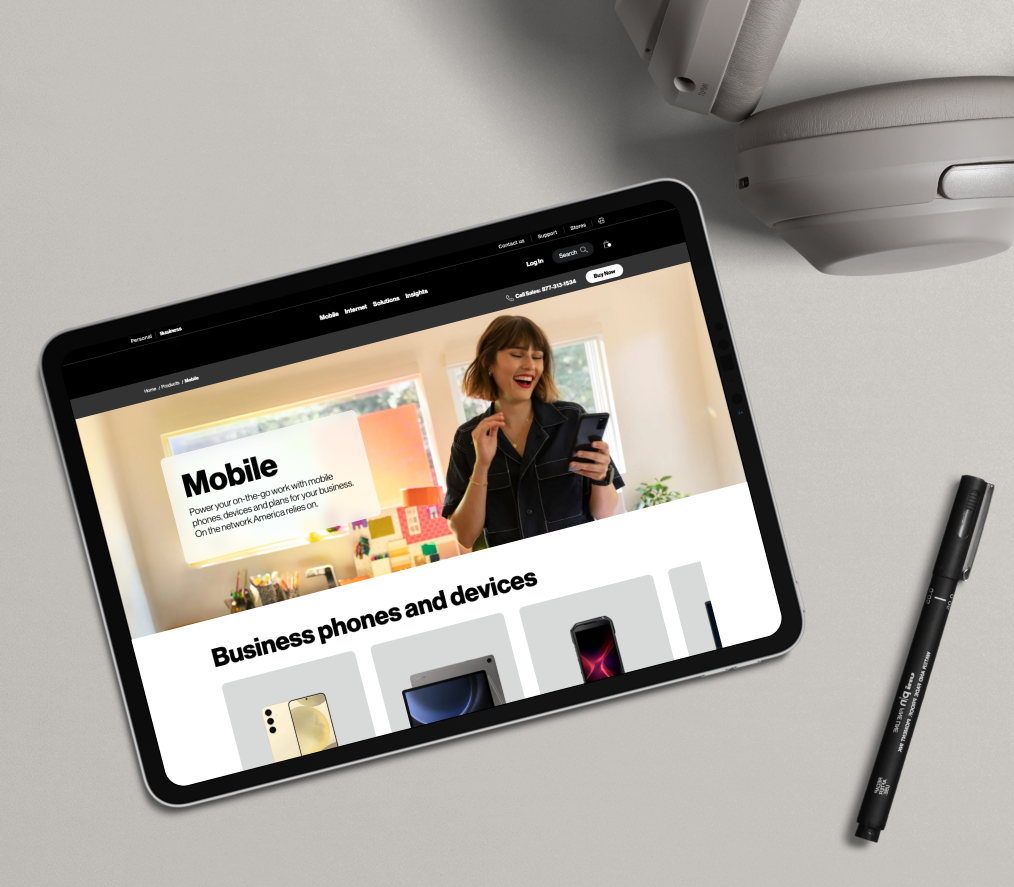
VERIZON ORDERING PROCESS
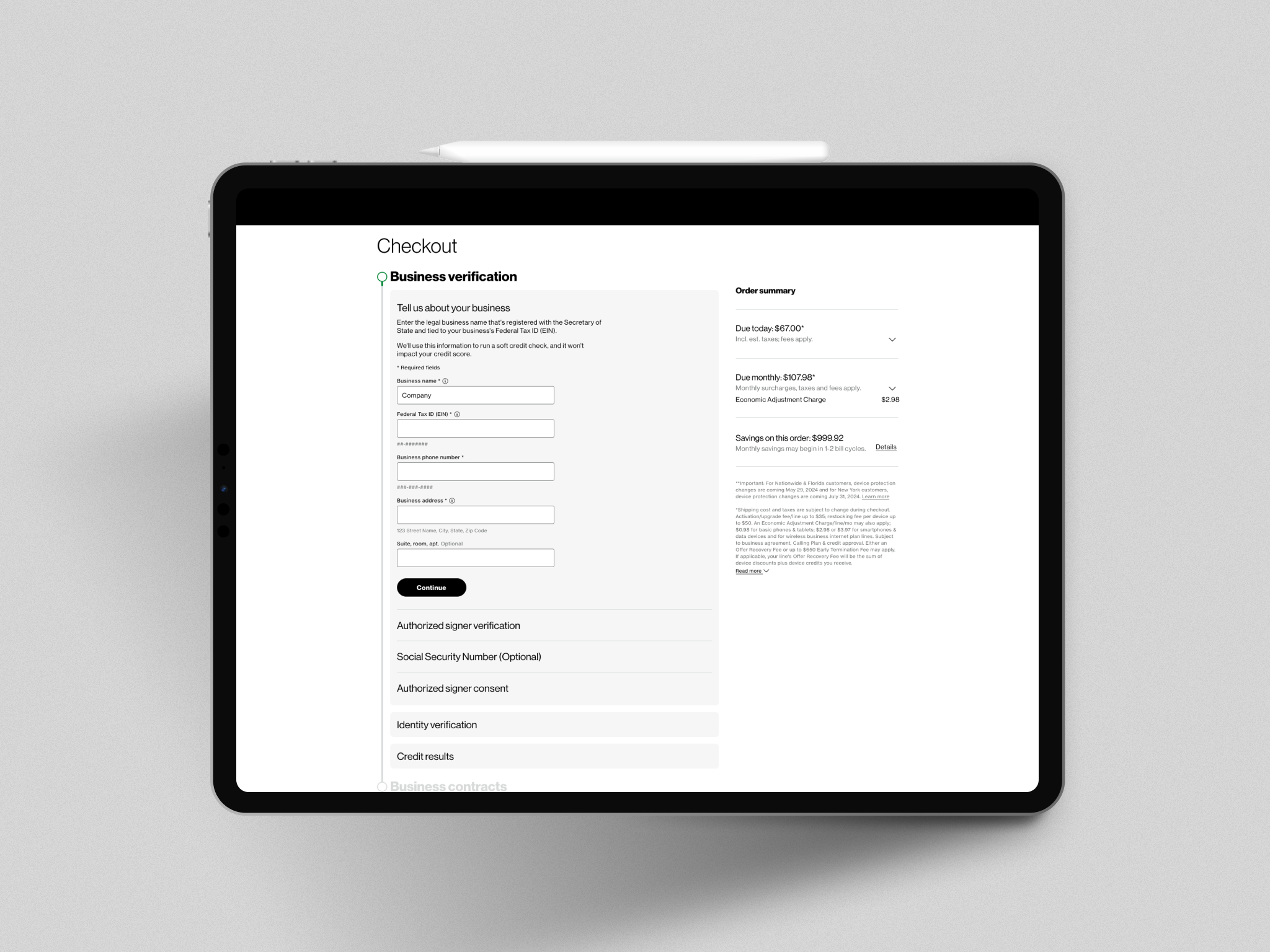
Objective
The VBG Prospect CX Design Team was given the opportunity to redesign the checkout flow. We were responsible for creating enhancements to reduce fallout and leverage the design system components. Throughout this project the team was focused on planning, prototyping, and testing the user experience to ensure it was simple, clear, and transparent for prospect customers.
Responsibilities
Given the complexity of the checkout flow. I was responsible for the design enhancements and improvements of the business verification and credit results section of the ordering process.
THE PROCESS
Discovery & Business Requirements
We began the discovery phase by gathering requirements form our stakeholders. During this phase we were able to leverage qualitative and quantitative data that was previously completed by our UX Research team. These insights helped us better understand users expectations when providing their business’s information.
Initial Key Findings
- Clearly communicate why we require specific information from our customers and help them understand the information they are providing is crucial for completing transactions efficiently.
- Customers preferred to provide details regarding their business rather than personal information.
Opportunities &
Design Phase
By leveraging past research and partnering with the teams copywriter we were able to streamline the language so it was concise and clear. We also applied the new design system to build the screens, and review the updated content with our legal team.
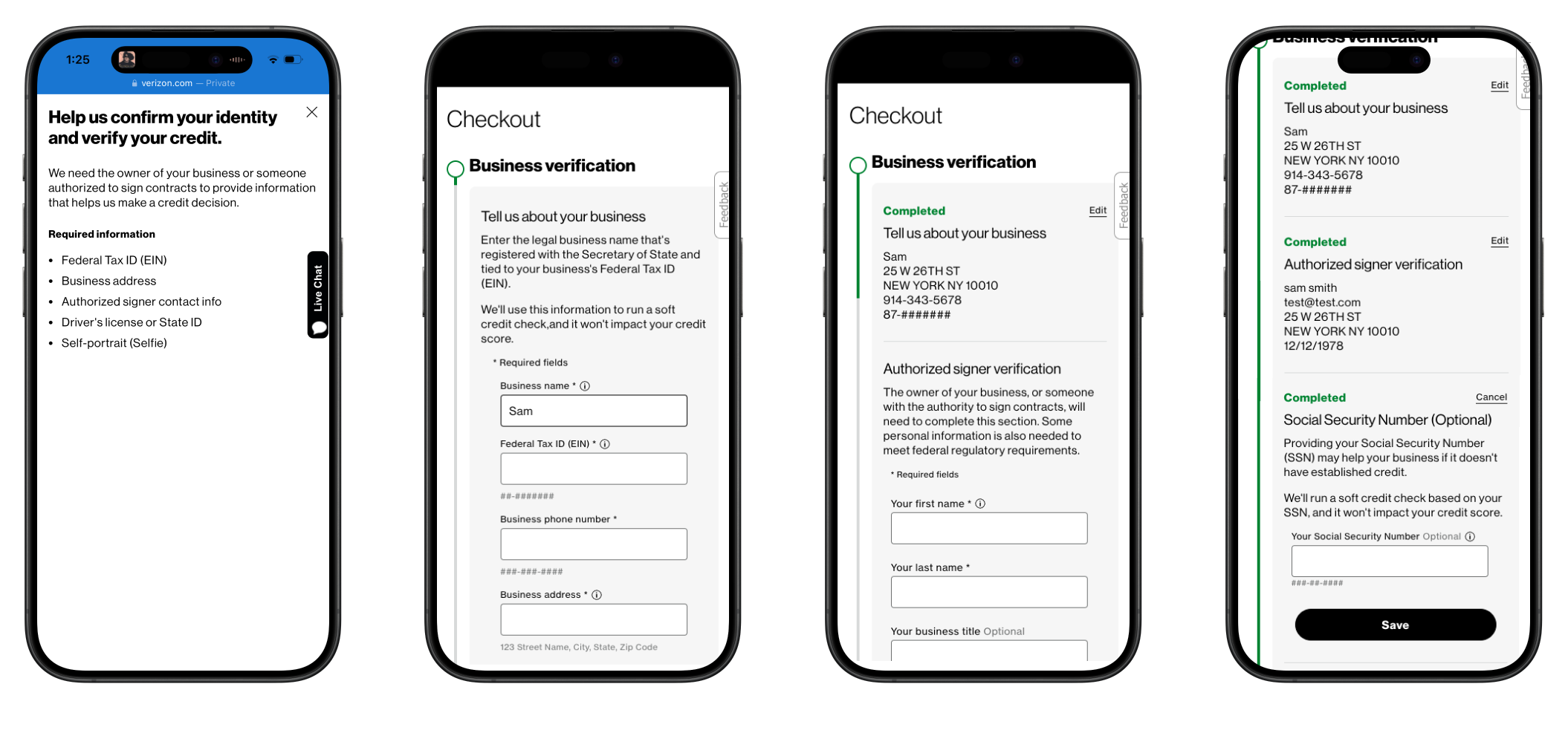
Business Verification Screens
Credit Results
The credit results portion of the E2E experience was complex, revolving around four primary outcomes determined by the business and/or personal information users provided. The goal is to provide users with comprehensive information from the start, empowering them to make informed decisions that align with their business needs.
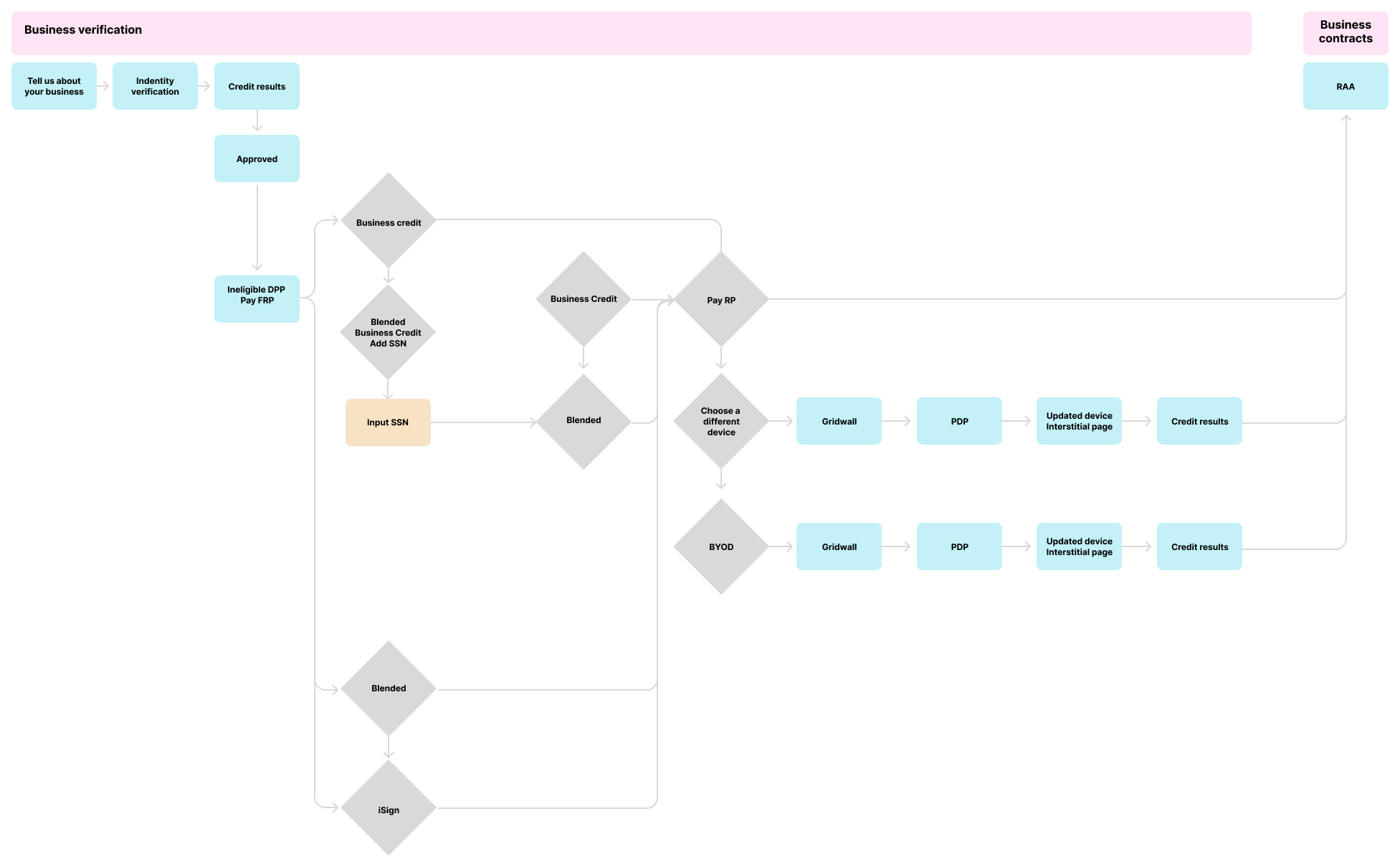
Credit Results Flow Diagram (1 Scenario)
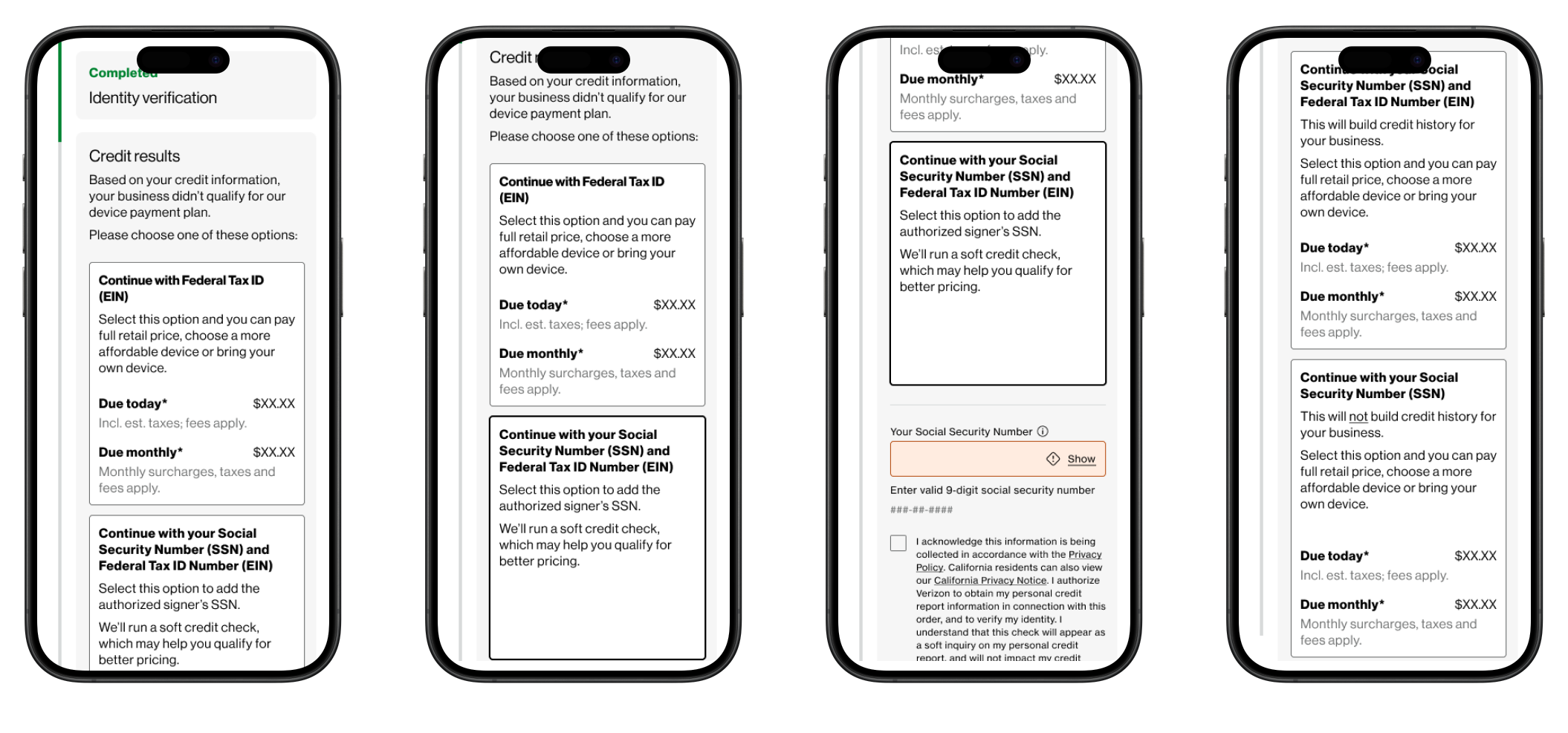
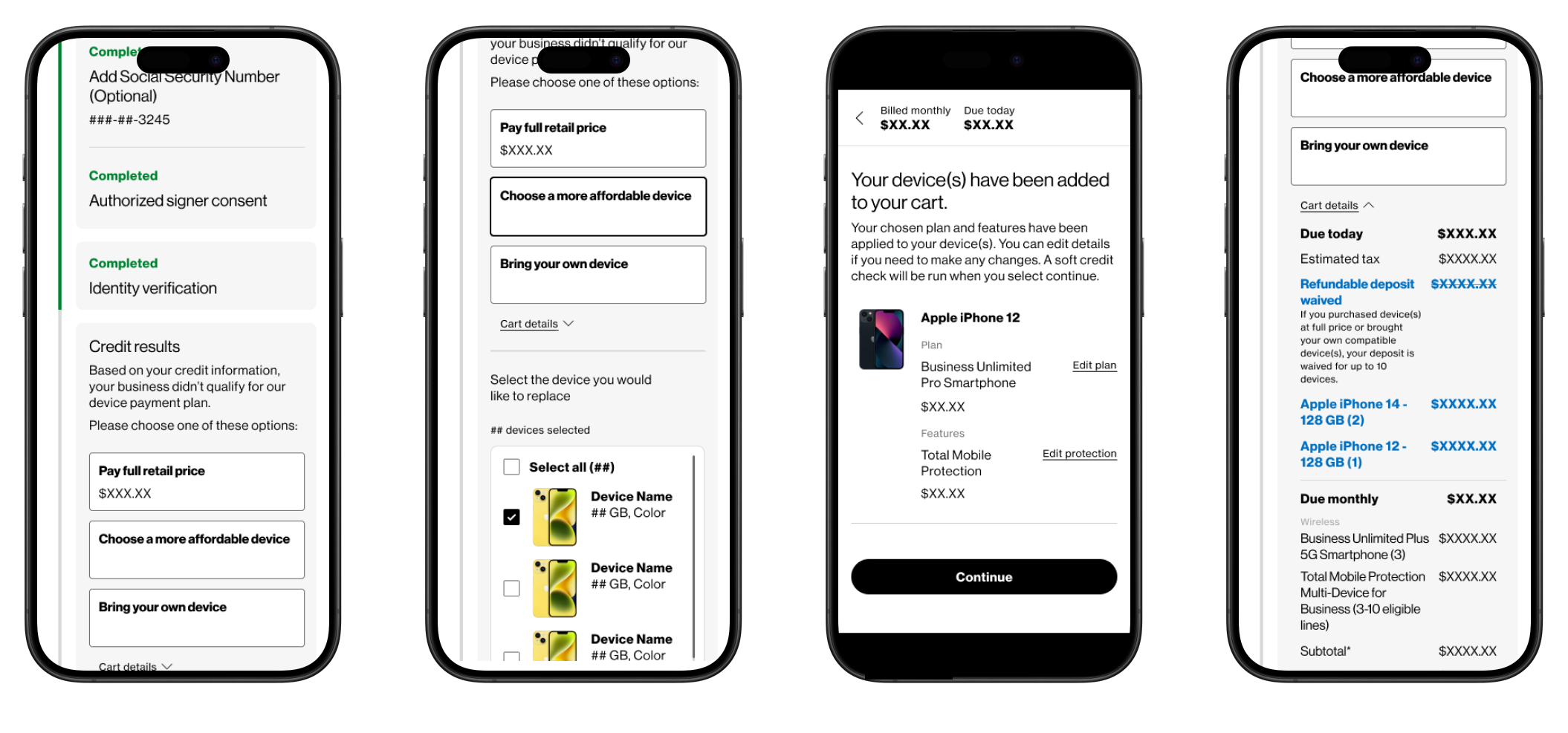
Credit Result Screens for the DPP Scenario
Research Study &
Key Findings
During the Design phase we created a research brief to test the most critical and complex portions of our lower funnel experience. For one portion of the flow test we tested the usability and preference between each concepts.
Users found the content easily digestible. In one of our research studies users were presented with 3 different concepts, they picked different aspects of each concept that would allow us to combine and create the ideal experience.
Upon completion of the end-to-end experience we were able to bring it to our research team to get users feedback on the overall experience and identify if there were any pain points within the experience.
Overall
Throughout the design phase we consistently scheduled call with our GTS partners to ensure there was consistency on the back-end and they could ensure the functionality of the experience. As we introduced new elements to the flow. Our design team consistently aligned to ensure we were maintaining a consistent functionality and interaction across the entire checkout flow.
Delivery & Future Optimizations
There was consistent collaboration between our stakeholders, the design team, and engineering teams to ensure the functionality of the backend aligns with the newly created designs.
After the launch of MVP1, there's a plan to increase tracking and benchmarking of metrics over time. Additionally, the stakeholders and CX design team have compiled a comprehensive list of improvements to implement post launch of the purchase flow.